


Ever find yourself wondering whether you’re paying the right amount for your Self-Assessment tax return? You’re not alone. Every year thousands of people search terms like “Self-Assessment tax return cost UK”, “How much do accountants charge for Self-Assessment?” and “tax return accountant fees” — because understanding what’s fair can feel a little murky.
The truth is: Self-Assessment fees vary because everyone’s tax situation is different. Income types, record-keeping, allowable expenses, property income, capital gains — they all affect how much work is involved.
At Daykin Scott, we don’t believe in a one-size-fits-all fee. Instead, we provide tailored quotes so you only pay for what you actually need. Below is a clear guide to typical Self-Assessment pricing to help you benchmark costs and understand the different levels of service available.
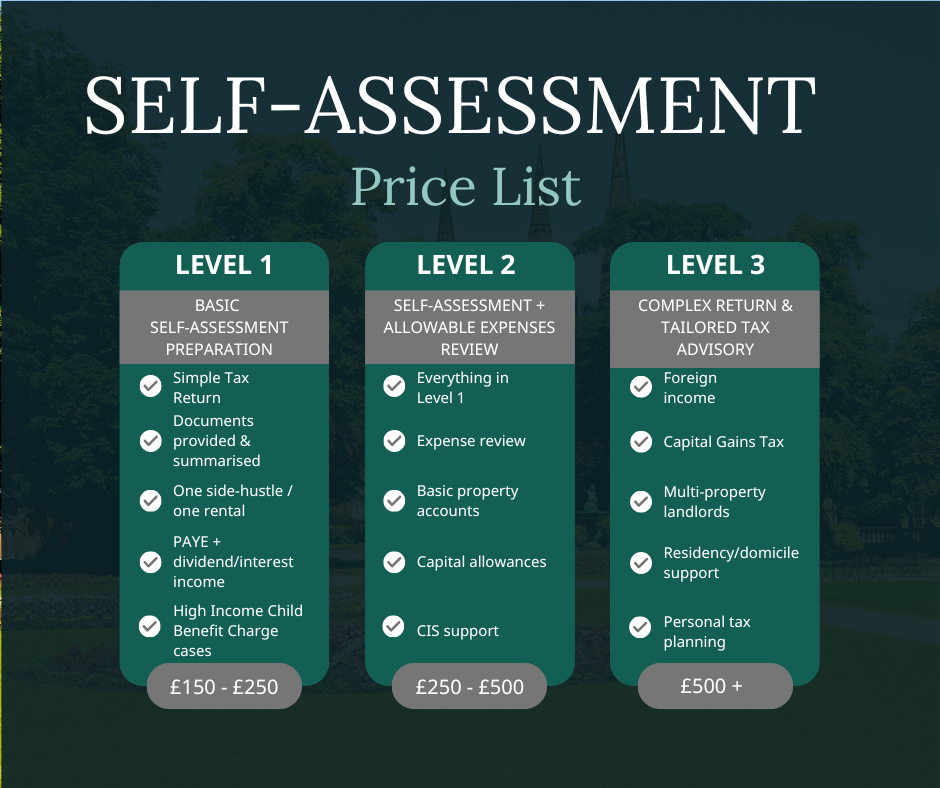
Level 1: Basic Self-Assessment Preparation (from £150–£250)
Ideal for those with straightforward tax affairs and fully prepared documents.
This level suits:
- Individuals with a small side-hustle
- Anyone with one buy-to-let property where accounts are already prepared
- Higher earners subject to the High Income Child Benefit Charge
- Individuals with dividend income or bank interest ready to summarise
What we typically expect at this level:
- P60/P45
- A spreadsheet of self-employed income & expenses
- Dividend vouchers
- Bank interest statements
- Any supporting documents already summarised
If your tax return is simple and well-organised, this level gives you accurate, compliant filing without the need for further tax advisory.
Level 2: Self-Assessment + Allowable Expenses Review (£250–£500)
This level includes everything in Level 1, plus a detailed check to ensure you’re claiming allowable expenses correctly.
What’s included:
- Review of business expenses
- Home office claims
- Travel and mileage
- Equipment and capital allowances
- Industry-specific expense guidance
- Profit optimisation for sole traders
Perfect for self-employed individuals, contractors, landlords, or anyone who wants peace of mind they’re not missing out on legitimate deductions.
Level 3: Complex Self-Assessment & Tailored Tax Advisory (from £500+)
This tier supports individuals with more complex tax circumstances or specific advisory requirements.
Typical scenarios include:
- Foreign income or overseas assets
- Capital Gains Tax (CGT) computations — property, shares, crypto, business disposals
- Multi-property landlords
- Multiple income streams (PAYE + self-employment + dividends + partnerships)
- Tailored tax planning
- Residency and domicile considerations
This level goes beyond filing: it’s about optimising your tax position, reducing liabilities where possible, and ensuring everything is fully compliant.
Why Do Self-Assessment Fees Vary?
Factors influencing price include:
- Number of income sources
- Level of tax advisory required
- Quality and completeness of your records
- Capital gains, property schedules, or foreign income
- Deadline urgency (January work often increases fees)
This is why personalised quotes are essential — no two clients have the same tax circumstances.
How Making Tax Digital Could Affect Your Future Tax Obligations and Fees
With Making Tax Digital for Income Tax Self Assessment (MTD for ITSA) expected to roll out from 2026, many self-employed individuals and landlords will soon move from one annual tax return to multiple digital submissions throughout the year. Under MTD, taxpayers will need to keep digital records, send quarterly updates, and complete both an End of Period Statement and a Final Declaration.
These extra touchpoints naturally create more administration, meaning many firms — including Daykin Scott — anticipate that accounting services may shift from traditional annual fees to more comprehensive year-round service packages. This allows clients to stay compliant throughout the year while receiving ongoing guidance on records, allowable expenses, and real-time tax positioning.
While MTD isn’t fully in force yet, it’s worth being aware that the increased reporting obligations may change how Self-Assessment services are delivered and priced in the future. At Daykin Scott, we’ll continue to provide transparent, tailored quotes to ensure you only pay for the support you genuinely need.
Final Thoughts
Whether your tax return is simple or more involved, the cost should reflect your level of complexity and the support you need. At Daykin Scott, our tailored approach ensures you receive the right level of service without unnecessary costs — giving you confidence, clarity, and a smooth Self-Assessment experience.
Get in touch with our team today to discuss your Self-Assessment needs and receive your personalised quote.