


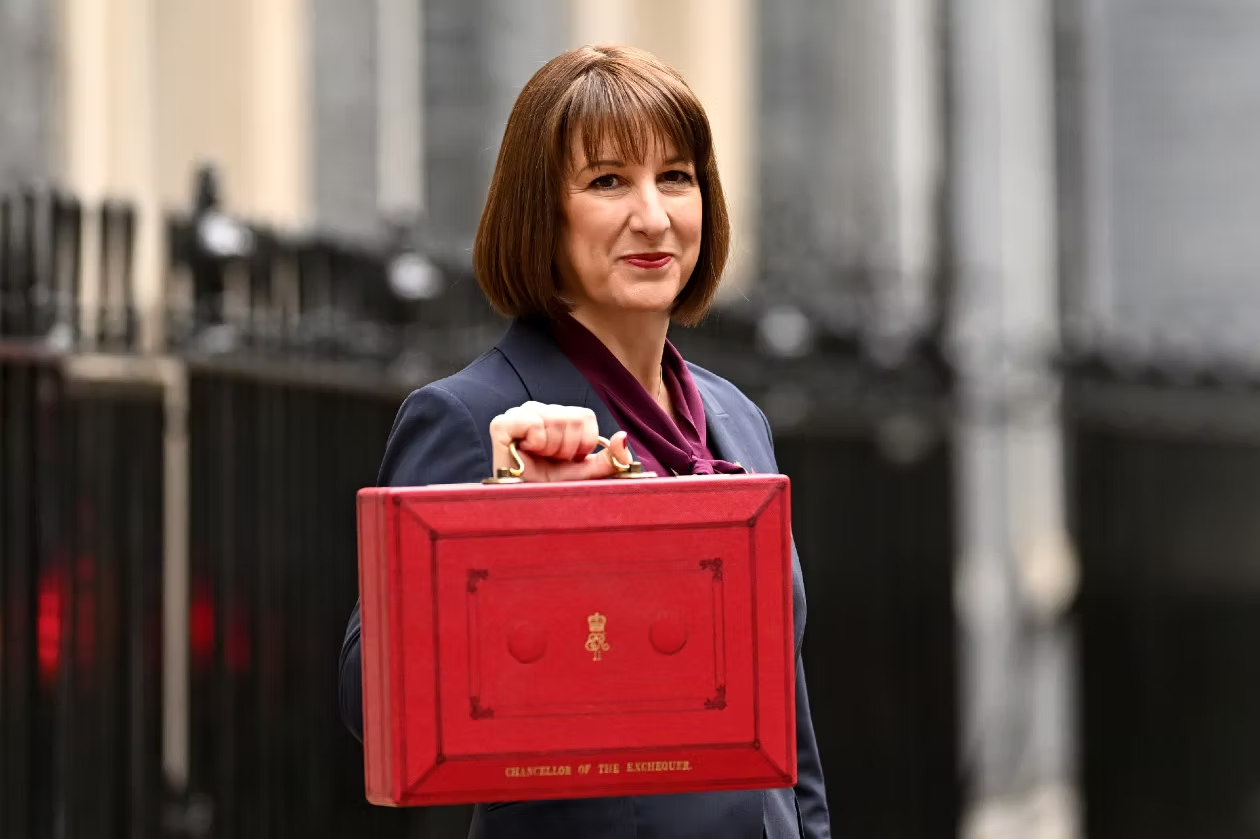
Chancellor Rachel Reeves has delivered her Autumn Budget 2025, setting out a plan she describes as “fixing the foundations” of the UK economy. With a focus on fairness, public service investment, and fiscal responsibility, the Chancellor announced a wide range of measures that will directly impact your household budget and your business bottom line.
At Daykin Scott Accountants, we have combined the key announcements into this essential summary. Whether you are an employer facing rising wage bills or a family planning your finances, here is what you need to know.
1. Wages and Employment Costs
For business owners, the most immediate impact comes from changes to the National Living Wage and Apprenticeship schemes.
National Living Wage (NLW) Increases The government has accepted the Low Pay Commission’s recommendations in full, effective from 1 April 2026. Employers will need to budget for the following increases:
- National Living Wage (21+): Increases by 4.1% to £12.71 per hour.
- 18-20 Year Old Rate: Increases by 8.5% to £10.85 per hour (narrowing the gap with the full rate).
- 16-17 Year Old Rate: Increases by 6.0% to £8.00 per hour.
Apprenticeships: Good News for SMEs There is a significant boost for small and medium-sized businesses looking to hire young talent:
- Free Training: The government will fully fund apprenticeship training for under-25s in SMEs. You will no longer need to pay the 5% co-investment cost.
- Apprentice Wage: The minimum hourly rate for apprentices will rise to £8.00 per hour (a 6% increase).
2. Family Support and Personal Tax
There are major changes to the benefits system and tax thresholds that will affect families differently depending on their income levels.
Universal Credit & Child Benefit
- Two-Child Limit Scrapped: In a major policy shift, the government is scrapping the “two-child limit” in Universal Credit. This means families claiming support will now receive entitlement for third and subsequent children, a move aimed at reducing child poverty.
- High Income Child Benefit Charge (HICBC): For higher earners, the plan to move to a household income assessment has been scrapped due to complexity. The charge remains based on individual income:
- The charge applies if one parent earns over £60,000.
- The benefit is fully clawed back once that individual earns £80,000.
Income Tax Thresholds Personal tax thresholds have been frozen for a further three years, from 2028 until 2031. While your tax rate isn’t changing, this “fiscal drag” means that as your wages rise, you may be pulled into higher tax bands.
3. Business Tax and Planning
Business Rates Reform There is relief for the high street. The Budget introduces permanently lower business rates for retail, hospitality, and leisure businesses. To fund this, a higher multiplier will be applied to the most expensive properties (such as large distribution warehouses).
Employee Ownership Trusts (EOTs) If you are planning an exit strategy, take note: The 100% Capital Gains Tax relief on selling a business to an Employee Ownership Trust is being restricted. The relief will be cut to 50%, significantly changing the tax efficiency of this sale structure.
Corporation Tax & Investment
- The government has committed to a Corporate Tax Roadmap, keeping the main rate stable.
- Innovation: A new “UK Listing Relief” on Stamp Duty Reserve Tax is being introduced to encourage scaling companies to list in the UK.
4. Wealth and Assets
To align income from assets closer to income from work, the Chancellor announced several tax hikes:
- Dividends & Capital Gains: Taxes on dividends and property income will increase.
- Pension Salary Sacrifice: From 2029, National Insurance relief on salary sacrifice pension contributions will be capped at £2,000 per person. This targets a relief that has historically benefited higher earners.
- Electric Vehicles: A new “modest self-reported per-mile levy” will be introduced for electric vehicles to ensure they contribute to road maintenance as fuel duty revenues decline.
Summary: What Should You Do Now?
The Autumn Budget 2025 presents a mixed picture. For SMEs, the removal of apprenticeship training costs is a welcome sweetener, but the rise in the National Living Wage will increase payroll pressure. For individuals, the scrapping of the two-child limit in Universal Credit is a boost for larger families, but the freeze on tax thresholds and the clampdown on salary sacrifice require careful planning.
Action Points:
- Employers: Review your payroll budgets for April 2026 to account for the new wage rates.
- Directors: Review your dividend strategy and pension contributions in light of the new tax changes.
- Families: Check if the changes to Universal Credit eligibility affect your household.
Contact Daykin Scott Accountants today to discuss how these changes affect your 2025/26 financial planning.